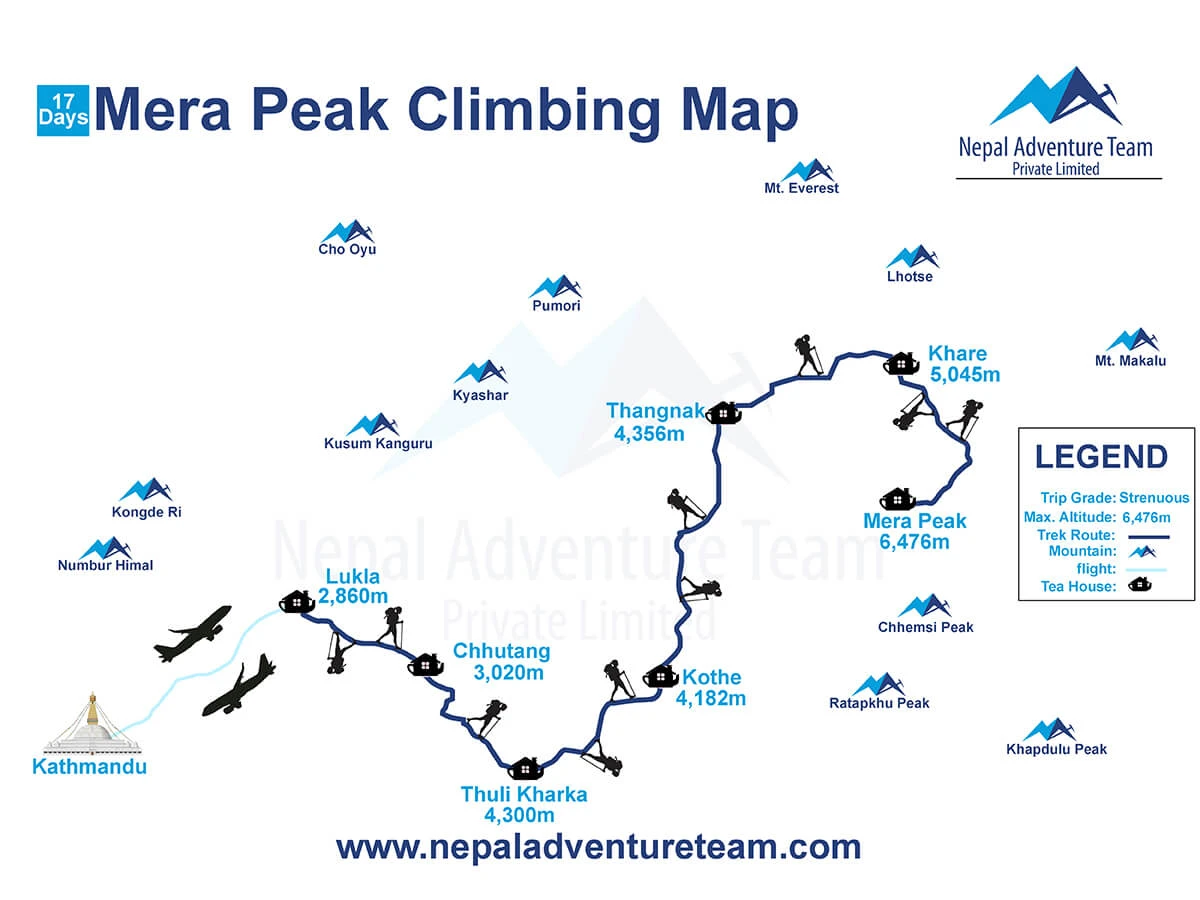
17 Days Mera Peak Climbing

77 Reviews
37 Reviews
Save to Wishlist

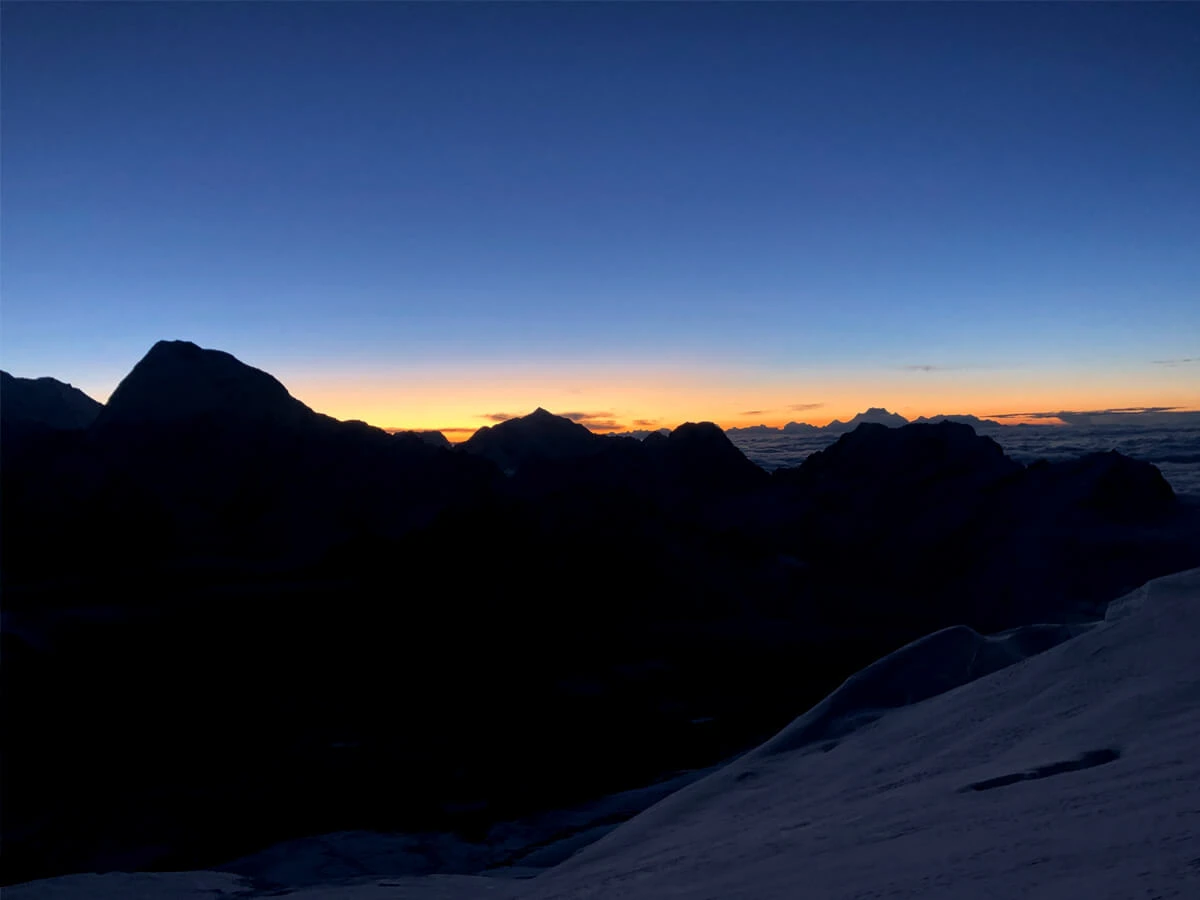
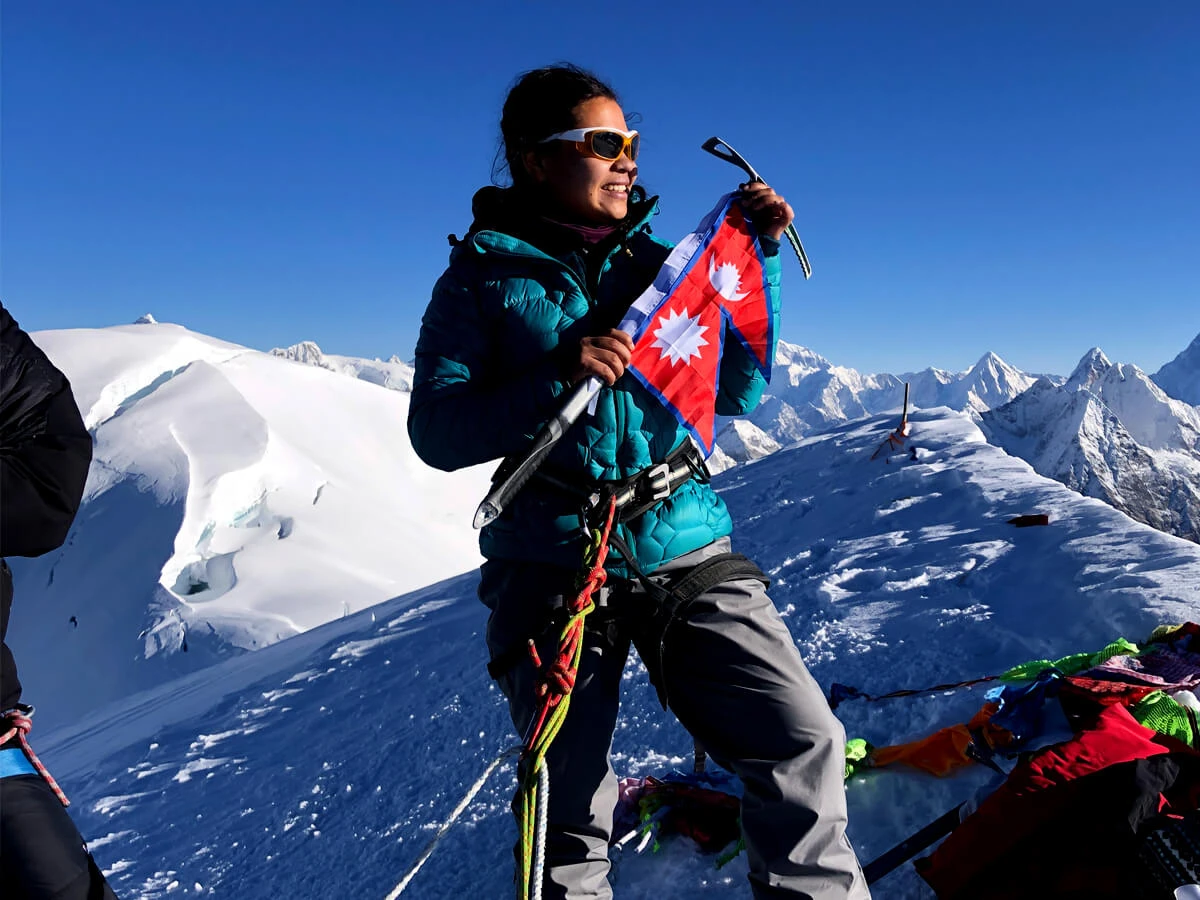
Mera Peak Climbing is a 17-day expedition. It is the highest trekking peak permitted by the Nepal Mountaineering Association, standing at 6,476m. The route begins in Lukla and heads east along the ridge dividing the Dudh Koshi and Hinku valleys, crossing Zatrawa La Pass into Hinku Valley before the final push through Mera La to the summit. Once graded Alpine F (Facile), the climb is now rated PD (Peu Difficile) at the final summit block due to recent route changes, making it technically approachable even for climbers with limited mountaineering experience, provided they're comfortable with basic skills like using a fixed rope, crampons, and a walking axe. From the top, climbers get a rare combined view of five of the world's highest peaks: Everest, Lhotse, Cho Oyu, Makalu, and Kanchenjunga. Along the way, the trail passes through Sherpa, Rai, and Tamang villages, forests, glaciers, and high ridges, making Mera Peak a popular choice both as a standalone climb and as training for higher Himalayan objectives.

Trip Facts

Trip Facts

Duration
17 Days
Trip Grade
Technical Challenging
Country
Nepal
Maximum Altitude
6461 m
Group Size
1 - 18 Pax, and More
Starts
Kathmandu
Ends
Kathmandu
Activities
Trekking, and Climbing
Best Time
Spring, and Autumn Season
Overview

Mera Peak Climbing is the highest and one of the most popular and marvelous peaks among the 27 peaks that the Nepal Government allows for climbing, and is listed by the Nepal Mountaineering Association (NMA). Specifically, Mera Peak is a mountain located in the Mahalangur section, the Barun sub-section, of the Himalayas, and is administratively situated within Sagarmatha National Park, Nepal. Mera Peak contains three summits: Mera North, 6,476 meters (21,247 ft); Mera Central, 6,461 meters (21,198 ft); and Mera South, 6,065 meters (19,898 ft); as well as a smaller "trekking summit" visible as a distinct summit from the south but not marked on most maps of the region. Although you may have seen Mera Peak Climbing packages listed as 6,654m / 21,832 ft in some sources, it has been misinterpreted as referring to Peak 41 near Mera Peak. Nepal Adventure Team will assist you in climbing Mera Peak North, with a height of 6,476 m /21,247 ft.

Experiences and Difficulties of Mera Peak Climbing 2026

Mera Peak is quite high, but overall, it is believed to be a suitable peak for developing mountaineering skills and serving as a warm-up for climbing other mountains. It has less technical complexity but demands a high level of energy, stamina, and endurance. The 6476m/21,247 ft elevation of Mera Peak enables you to cope with high altitude, altitude sickness possibilities and causes, extreme weather conditions, snowy paths, and climbing skills. It is technically achievable in comparison to the other 6000m/ 19,685ft trekking peaks in Nepal. The climb was Alpine Grade F (Facile/ Easy), but due to recent summit block changes, the final 30-40 meters /98ft – 131 ft has become Grade PD (Peu Difficile, little difficult / not very hard).

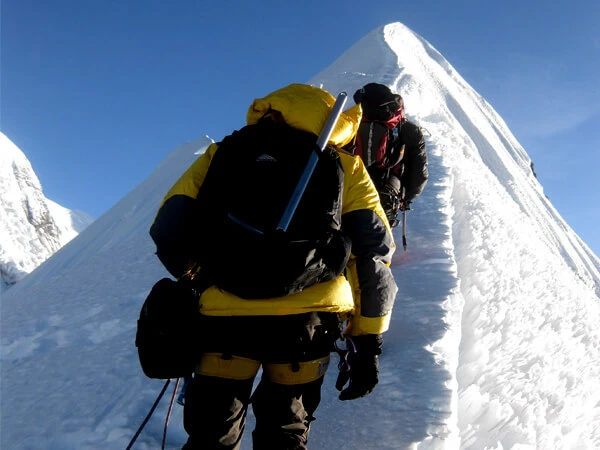
Additionally, there is no particular point that is difficult, but night climbing through glaciers might be tough for the new ones, and a learning process to handle long night climbing. For experienced climbers, it is a technically straightforward ascent, which is crucial for acclimatization. One also needs to take care of one's hydration and maintain a manageable pace. Experience in snow, glaciers, and ice would be a great advantage, though the Nepal Adventure Team will be aiding and guiding you. However, trekkers require basic alpine skills and be comfortable moving on a man rope, clipping in, with crampons, and using walking axes. It is the peak where one can execute the learned techniques, but never test themselves at high altitudes. It is famous because it can be adopted with little or no mountaineering experience.

Introduction: Mera Peak Climbing

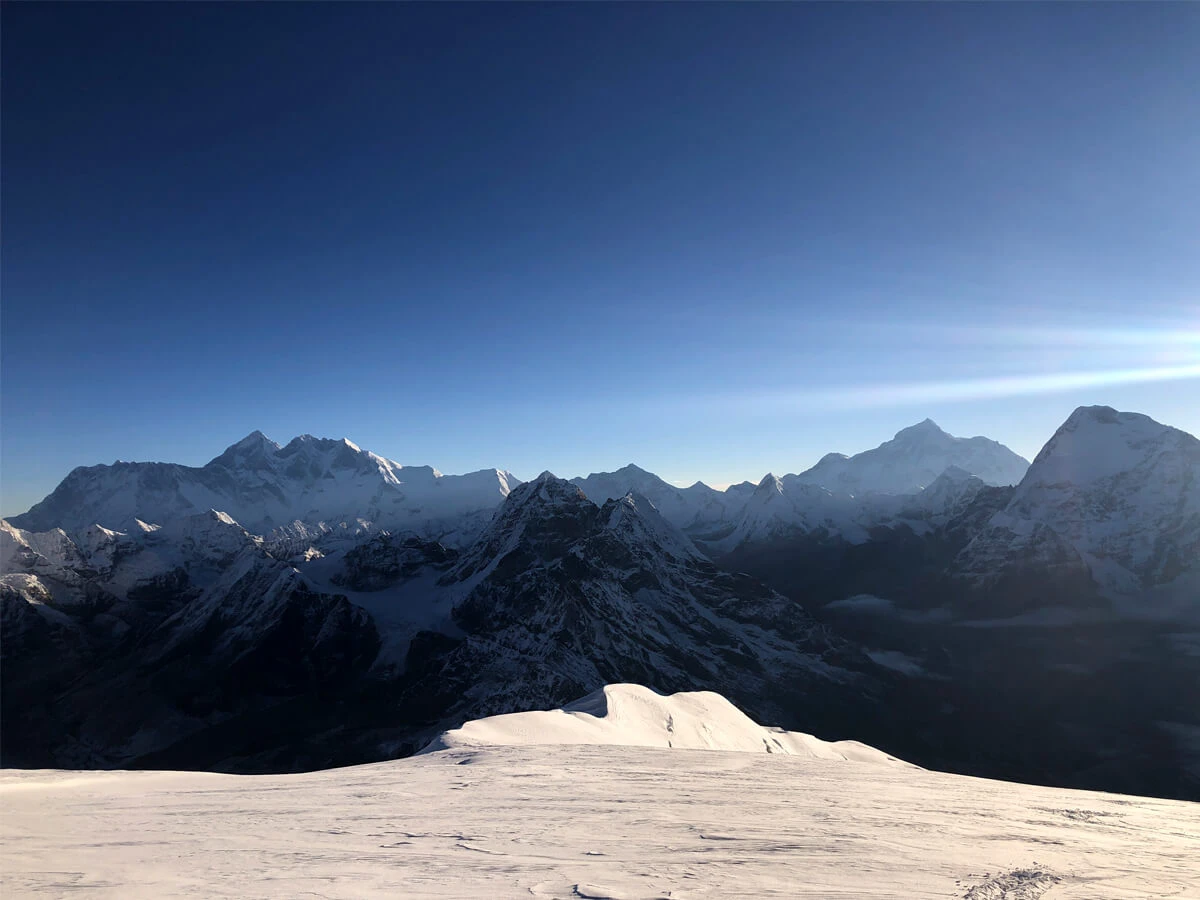
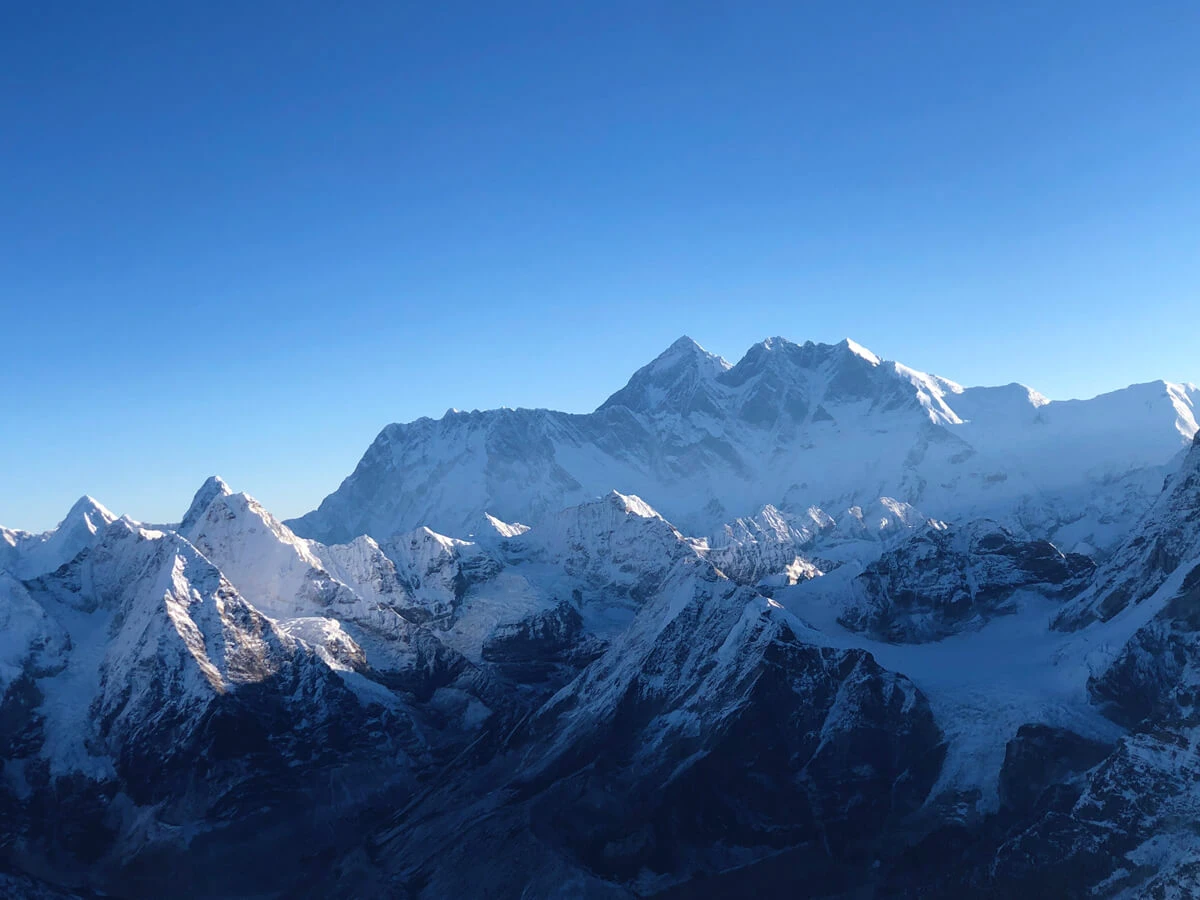
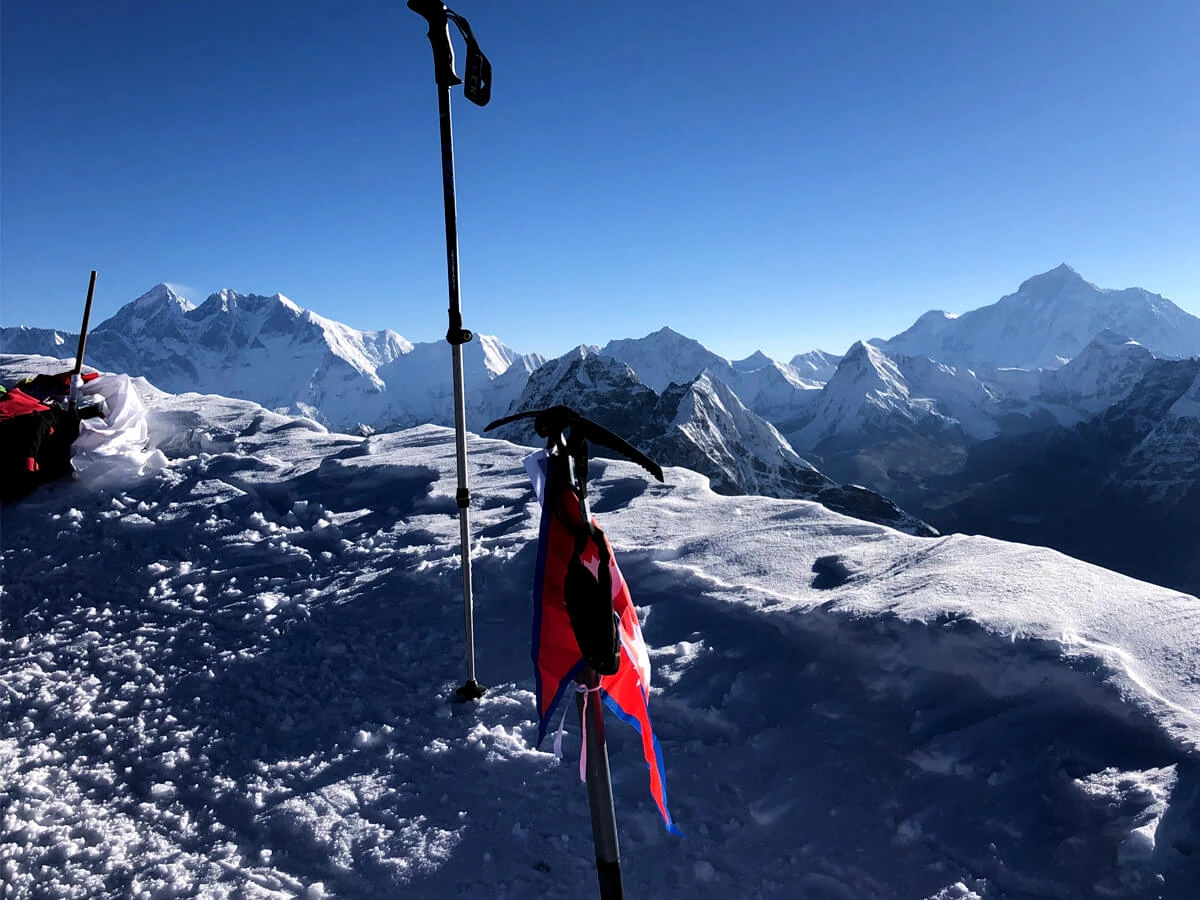
Mera Peak Climbing is not just the highest among the 27 peaks allowed for climbing by the Nepal Government but also supplies a magnificent clear view of 5 highest mountains in the world: Mt. Everest, (8848.86 m), Mt. Lhotse, (8516 m), Mt. Cho Oyu, (8201m), Mt. Makalu, (8463 m), and Mt. Kanchenjunga, (8586 m). Mera Peak Climbing trains you for climbing as well as leads you through the valleys, villages, ridges, glaciers, and mountains. As you move stepwise, you will observe the varying scenery from the bustling capital Kathmandu, pretty little Lukla Airport, high hills with forest, wide valleys, smooth pastures, sharp ridges, and cool glaciers to shining snowcapped mountains. Instead of heading north from Lukla towards Namche Bazaar or the popular Everest Base Camp trail, Mera Peak Climbing begins by moving east, along the ridge of peaks that divides Dudh Koshi from Hinku Valley. Pass the Zatrawa La Pass to reach Hinku and go northeast to accomplish Mera Peak.

Along with natural beauty, your stay will be cozy with the company and warm hospitality of locals from different ethnic groups, such as Sherpa, Rai, and Tamang. The traditions, lifestyle, and culture enhance your pleasant experience of Mera Peak Climbing. Mera Peak Climbing won’t just be about the peaks and mountains but rather the mixture of varied terrain, colorful trails, friendly people, and training oneself for higher mountains and thrilling experiences of Nepal. Cawthra La Pass adds another adventure in Mera Peak Climbing, whereas Hinku Valley soothes you. Overall, Mera Peak Climbing is technically an easier peak yet demands high stamina and energy for long, steep climbs alongside coping with rising altitude, where trails showcase the vibrant nature and people of Nepal and the Everest Region Trek of Nepal.

Nepal Adventure Team has been conducting Nepal Peak Climbing safely, ending at the summit with healthy memories and wonderful views.

Highlights

  • Mera Peak (Mera North) 6,476m /21,247 ft, the Highest Peak on the list permitted by NMA (Nepal Mountaineering Association)
  • Closely combined view of the 5 highest mountains on earth: Mt. Everest, 8848m, Mt. Lhotse, 8516m, Mt. Cho Oyu, 8201m, Mt. Makalu, 8463m, and Mt. Kanchenjunga, 8586m.
  • A mixture of Adventure from Hinku Valley, Zarwata la Pass to Mera La Pass, and Mera Peak
  • Panoramic mountain view flight to Lukla Airport
  • Authentic culture and lifestyle of Nepali ethnic groups: Sherpa, Rai, Tamang
  • Technically Easier Peak with the essence of climbing skills development
Roadmap

17 Days Mera Peak Climbing Itinerary

Starts: Kathmandu
Ends: Kathmandu
Day 01:

Arrival in Kathmandu via respective airlines.

Day 02:

Preparation and Trip Briefing (Option for Sightseeing)

Day 03:

Fly to Lukla and Trek to Chhutang (3020m) – 3/4 Hours

Day 04:

Trek to Thuli Kharka (3900m/12,795 ft) via Zatrawa La (4610m/15,088 ft) Pass – 5/6 Hours

Day 05:

Trek to Kothe (4095m/ 13,435 ft) – 5 Hours

Day 06:

Kothe to Thangnak (4326m/ 14,189 ft ) – 5 Hours

Day 07:

Acclimatization day at Thangnak (4326m/ 14,189 ft)

Day 08:

Trek to Khare from Thangnak (5045m) 6 Hours

Day 09:

Acclimatization day at Khare (5045m/ 16552ft)

Day 10:

Trek to Mera Peak High Camp (5700m/ 18,696 ft) – 6-7 Hours

Day 11:

Summit Mera Peak (6,476m /21,247 ft) and return to Khare via Mera Camp (5045m/ 16552ft)

Day 12:

Extra / Additional Day

Day 13:

Trek to Kothe from Khare – 6 Hours

Day 14:

Trek to Thuli Kharka from Kothe – 5 Hours

Day 15:

Trek to Lukla from Thuli Kharka via Chhutang, 6/7 Hours

Day 16:

Fly back to Kathmandu

Day 17:

Finale Departure

Need Assistance? Reach Out!
Have questions or need trip planning help? Contact us anytime—our travel experts are here to assist you!
Cost Details

17 Days Mera Peak Climbing Cost Details

Includes

  • Airport picked up and dropped off by a private Car
  • Welcome and farewell dinner at a typical Nepali restaurant
  • 2 nights' Hotel on a BB plan basis in Kathmandu
  • Kathmandu to Lukla and Kathmandu by flight (both ways)
  • 9 / 10 nights of tea/House accommodation during the trek
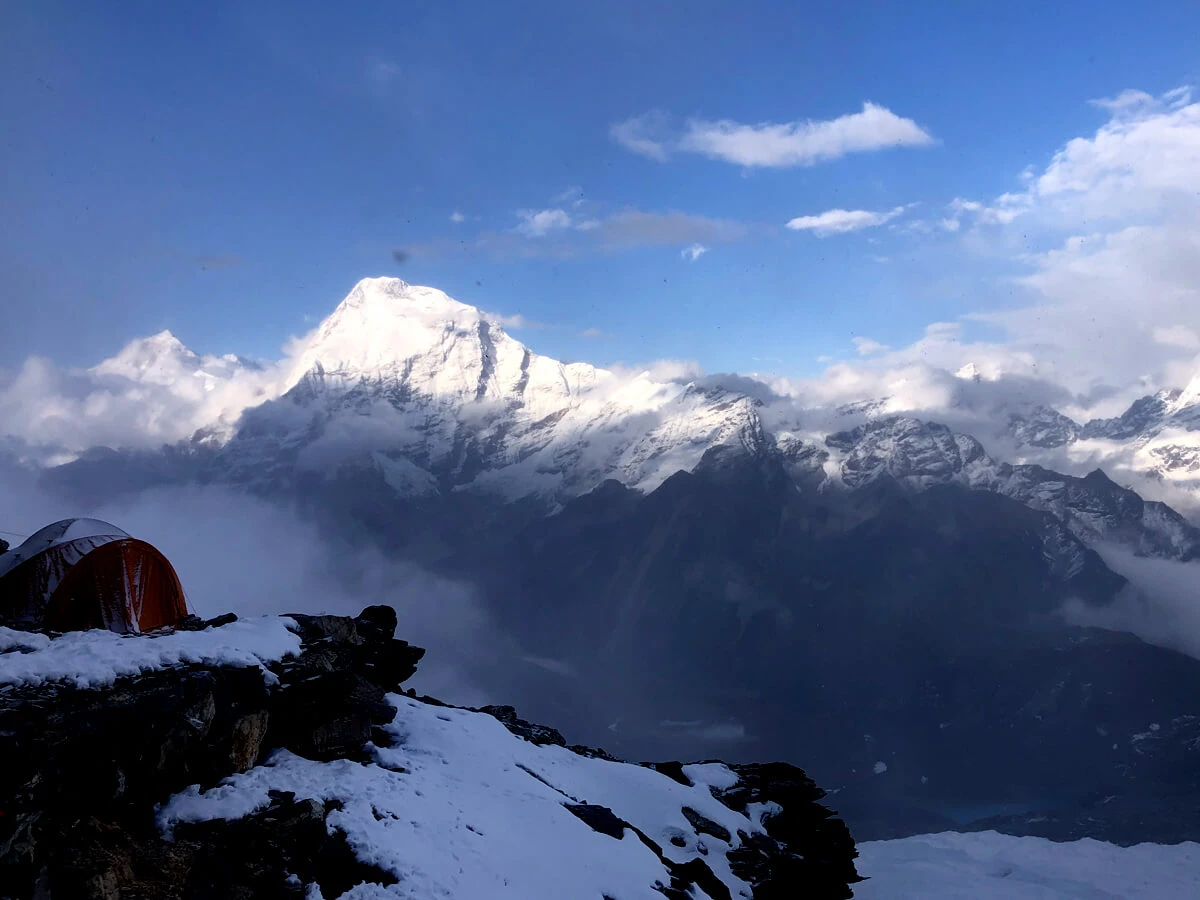
  • 3 nights of tented camping accommodation at Mera Base Camp / High Camp
  • All full-board meals during the trek, such as Breakfast, Lunch, Dinner, and Tea/Coffee
  • An experienced trekking and climbing guide, cook, and porters, and their food, salary, equipment, insurance, etc
  • All camping gear and kitchen stuff during the trek
  • All necessary trekking and Peak climbing permits
  • TIMS Card (Trekkers Information Management System) fee
  • All necessary trekking gear and equipment for you and our staff
  • Company T-shirt, trek route map, and an appreciation letter after a trek
  • First Aid Medical Kitbag and medicine
  • All government VAT and Local Taxes

Excludes

  • Nepal visa fee and international flight
  • Personal expenses and climbing extra equipment
  • Extra accommodation and meals behind schedule
  • Travel and rescue insurance
  • Gratitude to the staff
Upcoming Trip

Dates & Availability

Mera Peak Climbing fixed departure date, and the cost is on schedule for 2025 and 2026, and if you want to customize the itinerary and private trip kindly contact us.  send us a direct message and Call +977 9851234322 (Jeevan Thapa)

Select Departure Dates
Sep 2026
Oct 2026
Nov 2026
Dec 2026
Displaying September Departure Dates
Start Date
Sep 06, 2026
End Date
Sep 22, 2026
Status
Guaranteed
Price
US$2475
Start Date
Sep 13, 2026
End Date
Sep 29, 2026
Status
Guaranteed
Price
US$2475
Start Date
Sep 20, 2026
End Date
Oct 06, 2026
Status
Guaranteed
Price
US$2475
Start Date
Sep 27, 2026
End Date
Oct 13, 2026
Status
Guaranteed
Price
US$2475
Must-Know

Essential Information

Permits Required for Mera Peak Climbing

Climbing Mera Peak legally requires a set of permits, each serving a specific purpose in protecting the region and ensuring climber safety.

  • Mera Peak Climbing Permit (NMA): Issued by the Nepal Mountaineering Association, this permit is mandatory since Mera Peak is officially listed among the 27 peaks approved for climbing in Nepal. It authorizes the actual summit attempt and helps regulate climbing activity in the region.
  • Sagarmatha National Park Entry Permit: Since Mera Peak lies within Sagarmatha National Park, this permit supports conservation efforts and grants legal access to the park's protected trails and wildlife areas.
  • Local Area Permit: Collected upon arrival in Lukla, this permit allows access to the Hinku Valley and the surrounding local municipality areas beyond the main national park boundary.
  • TIMS Card (Trekkers' Information Management System): This permit keeps a record of trekkers in the region, which is essential for safety tracking and emergency response if something goes wrong on the trail.

All of these permits are arranged by Nepal Adventure Team and included in the package cost, so climbers don't need to handle the paperwork individually.

Best Time for Mera Peak Climbing

Timing plays a major role in the success and safety of a Mera Peak Climb, given the altitude and technical demands near the summit. Spring, from March to May, is one of the most favored seasons, offering warmer daytime temperatures, blooming rhododendron forests at lower elevations, and generally stable weather windows for the summit push. Autumn, from September to November, follows the monsoon season and is known for its exceptionally clear skies, dry trails, and some of the best mountain visibility of the year, making it a favorite among climbers who want unobstructed views of Everest, Lhotse, Makalu, and the surrounding peaks from the summit. Both seasons reduce the risk of heavy snowfall, high winds, and poor visibility that can affect the technical sections near Mera La and the final summit block. Climbing outside these windows, particularly during winter or monsoon, is possible but comes with added risks like extreme cold, icy trails, or reduced visibility from rain and cloud cover, so most climbers and guides recommend sticking to these two peak seasons for a safer and more rewarding ascent.

Essential Clothing and Climbing Gear for Mera Peak

  • Insulated down jacket for high-altitude cold
  • Thermal base layers (top and bottom)
  • Windproof and waterproof outer shell jacket and pants
  • Insulated climbing boots for summit day
  • Sturdy trekking boots for lower trail sections
  • Crampons for glacier and snow travel
  • Ice axe for the summit push
  • Climbing harness and helmet
  • Warm gloves (liner and outer pair)
  • Sun hat and warm insulated hat/balaclava
  • UV-protection sunglasses or glacier goggles
  • Trekking poles for stability on uneven terrain
  • Sleeping bag rated for extreme cold (provided by NAT)

Why Choose Nepal Adventure Team for Mera Peak Climbing

Nepal Adventure Team brings years of experience organizing treks and peak climbs across Nepal, with a strong track record on technical routes like Mera Peak. The team handles all permit paperwork, including the NMA climbing permit, national park entry, and TIMS card, so climbers can focus on preparation rather than logistics. Experienced government-licensed climbing guides and Sherpa staff lead every expedition, offering pre-summit training and hands-on support with ropes, crampons, and ice axes for climbers who are new to technical mountaineering. The package also includes full camping and kitchen setup at high camp, quality safety equipment, and a first aid kit, backed by a company that prioritizes acclimatization days and safety over rushed itineraries.

Ready to Book?
Secure your spot now and take the first step toward your next unforgettable adventure.

What Our Guests Say?

You May Also Like

Pisang Peak Climbing
5.0(3 Reviews)
15 Days
20 People
Price From
US$2265
Lobuche Peak Climbing
5.0(4 Reviews)
18 Days
18 People
Price From
US$2180
Island Peak Climbing
5.0(4 Reviews)
18 Days
18 People
Price From
US$2185
Need Help? Call Us+977 9841486322