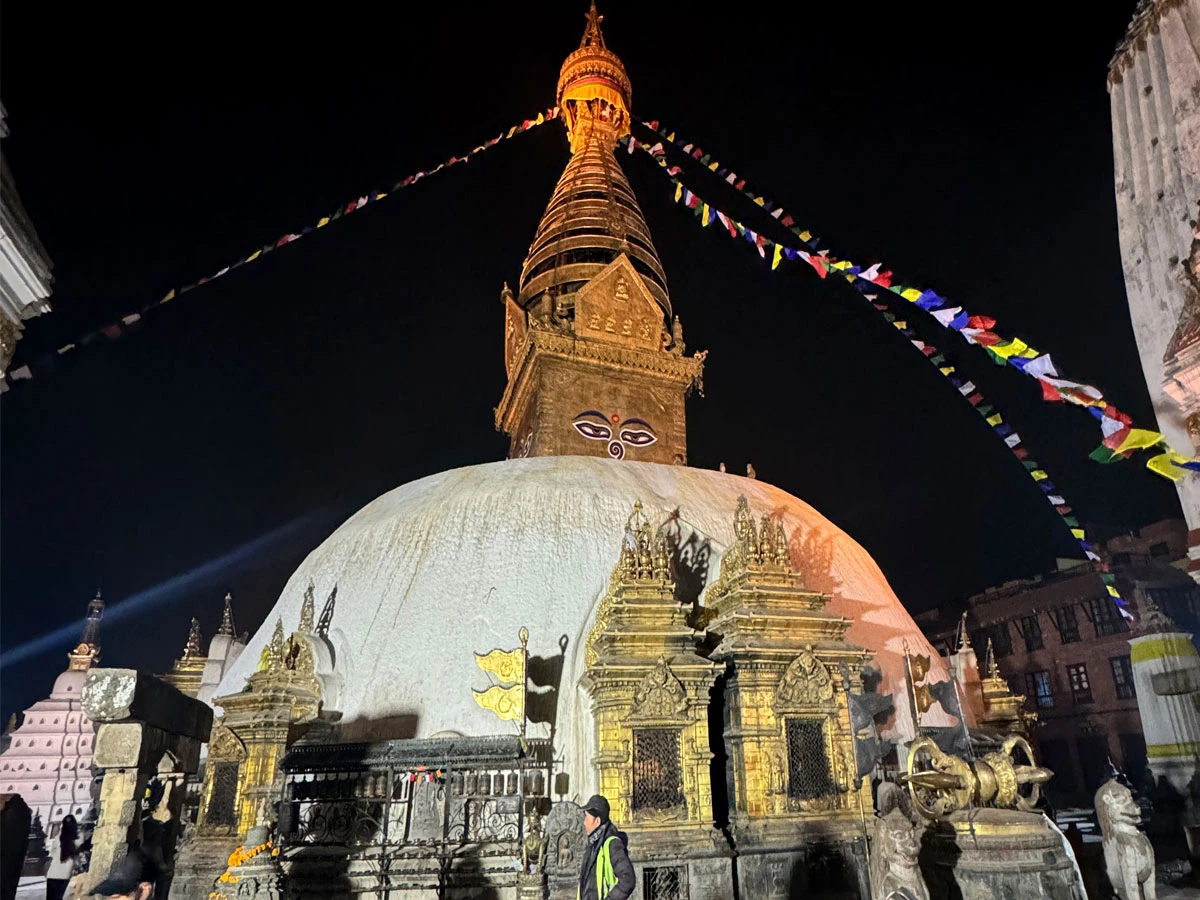
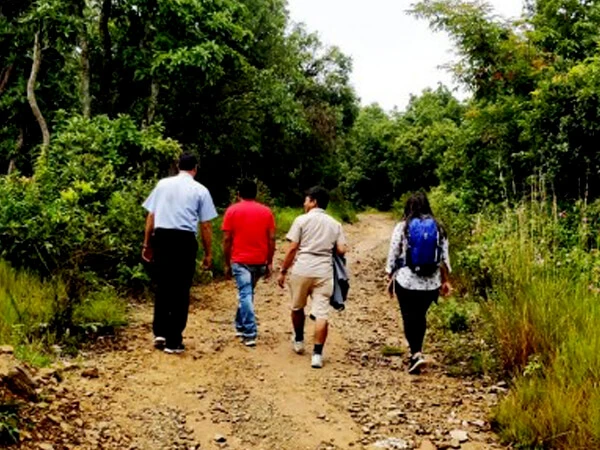
The Annapurna Community Eco Village Trek is a peaceful and culturally immersive journey into the heart of rural Nepal, away from busy trekking trails. This eco-friendly trek takes you through traditional Gurung villages, lush forests, terraced farmlands, and scenic hill viewpoints with stunning views of the Annapurna and Machhapuchhre ranges. Staying in community-run eco lodges and homestays, trekkers directly support local livelihoods while experiencing authentic village life, organic local food, and warm Himalayan hospitality. Ideal for nature lovers and responsible travelers, this short and rewarding trek offers a perfect blend of natural beauty, culture, and sustainable tourism in the Annapurna region.
Annapurna Community Eco Village Trek
Trip Facts
Annapurna Community Trek is one of the exemplary trekking trails of Nepal, promoting Eco-tourism as well as inclusive community development. Annapurna Community Trek was initiated and encouraged by Dr. Mahabir Pun, a local villager, activist, and social entrepreneur.
Annapurna Community Trek traverses through the elegant nature and its tranquility, along with the beautiful blend of culture, eco-tourism concept, and information technology in rural areas. Trekkers can enjoy the Himalayas, terrace farmland, rhododendron forest, village lifestyle, ethnic group culture, and tradition, as well as the local effort to incorporate information technology in education, health, and community development. Annapurna Community Trek leads you to the villages cooperating to have sustainable development of the community by balancing modern technology and the preservation of nature.
Story of Annapurna Community Trek
Annapurna Community Trek was initiated by Dr. Mahabir Pun. Dr. Mahabhir Pun won the Ramon Magsaysay Award in 2007 for Community Leadership and is highly dedicated to developing information and communication technology in rural areas of Nepal.
Mahabir Pun is the habitat of Nagi village which comes along the Annapurna Community Trek. He faced a hard time getting the right information to pursue his education and saw the struggles of rural life in Nepal. Eventually, he managed to pursue higher education in the USA and returned to his village to overcome such a hard time and struggle for the coming generation. He exclusively made information technology accessible in villages and encouraged the community to utilize it in education, farming, healthcare, and information.
Annapurna Community Trek has been developed offbeat through some of the first villages to come under Mahabir Pun’s project and used to fund the project. While choosing the Annapurna Community Trek, trekkers not only enjoy the trekking, the Himalayas, nature, and Nepali villages, but also contribute to an inclusive community development project.
Annapurna Community Trek
Annapurna Community Trek takes trekkers through the lap of the Annapurna and Dhaulagiri mountain ranges. It has already been mentioned that the Annapurna Community Trek focuses on providing closeness to nature and community. Homestay experiences are gained in the Annapurna Community Trek along with communicating with locals and locals’ plans for sustainable development. The villages and communities involved in the Annapurna Community Trek are focused on promoting eco-tourism, inclusive community improvement, and sustainable development. The trekking of every visitor through the Annapurna Community Trek contributes to their plans and encourages them to stick with it.
From Kathmandu, you will drive to Pokhara through Prithivi Highway and drive to Beni-Baglung Highway to reach Beni from Pokhara. The road trip will be filled with rivers, hills, forests, farmlands, and the Himalayas.
The walk for the Annapurna Community Trek begins from Galeshwor. Galeshwor is also famous for the Lord Shiva Temple. You will be staying at the villages as Bans Kharka, Nangi, Mohare Danda, Danda Kahrka, and Tikot which will give you the lifetime experience of simplicity and togetherness.
The trail is filled with woods, tranquility, and Himalayan views of Annapurna and Dhaulagiri. Nagi, the village of Dr. Mahabir Pun, is a tiny village with great wonders. Nangi has been working for inclusive development through education, technology, and the practice of eco-tourism. They promote local handicrafts, Lokta paper products, fish farming, and mushroom farming, as well as preserve traditions and culture. Nagi village is an exceptional example of hardship and the unity of the community, decorated by the Annapurna and Dhaulagiri ranges.
Besides, Mohare Danda is also considered to be an alternative to the Ghorepani Poonhill Trek. Trails are scented by diverse vegetation as well as lead to the ridges, offering an enhanced view of Dhaulagiri, Gurja Himal, Tukuche Peak, Dhampus Peak, Nilgiri, Barha Shikhar, Annapurna I, Annapurna South, Machhapuchhre, Annapurna II, Annapurna IV, Lamjung Himal, Manaslu, and many peaks.
Another amazing thing about this trail is that it has a wireless internet relay station providing internet to remote villages for education, health services, and communication. The magical moment of sunrise at Mohare Danda adds energy and pleasure to trekkers.
During March-May, the rhododendron blooms at its fullest and spreads its pinkish color throughout the hills. The mountains seem to be closer and bigger. Tikot is another pleasant village filled with Magar ethnic groups entertaining the trekkers with cultural dance and music.
The homestay during the Annapurna Community trek will offer you closeness to the local community, lifestyle, and culture. Additionally, the village has old traditional stone wall houses with eco-cottage features and slate roofs with satellite to connect to wireless wifi. You can also enjoy the traditional Magar dance.
Nepal Adventure Team has been organizing and arranging the Annapurna Community Trek for enthusiastic trekkers as well as customizing and combining the Annapurna Community Trek as per the trekkers’ requirements.
Highlights
- View of Mountain Ranges: Annapurna I 8091m, Annapurna South 7219m, Machhapuchhre 6993m, Annapurna II 7937 m, Annapurna IV 7525m, Dhaulagiri 8167m, Nilgiri 7061m, Lamjung Himal 6983 m, Manaslu 8163m, Gurja Himal, Tukuche Peak, Dhampus Peak
- Community Homestay experience
- Closeness to the lifestyle, culture, and tradition of Annapurna Community Trails
- Diverse flora, fauna, and landscape
- Initiative for inclusive community development
- Path of sustainable development and eco-tourism
Outline Itinerary
Annapurna Community Eco Village Trek Itinerary
Arrival day in Kathmandu (1300m / 4264 ft)
Nepal Adventure Team will be at Tribhuvan International Airport to welcome you to Nepal. You will be transferred to a hotel situated in Thamel, a tourist hub of Kathmandu. You will get leisure time to relax and stroll around as per the schedule, once your flight lands in Kathmandu. You can also double-check your trekking gadgets before leaving Kathmandu.
Besides, Nepal Adventure Team will organize a Welcome Dinner for you, and you will also see some cultural performances. It is also a gesture to pass best wishes for your Annapurna Community Trek.
Drive from Kathmandu to Pokhara (823m/2700ft), 6-7 hours
After an early breakfast, you will head towards the western part of Nepal and stay in Pokhara valley. Pokhara Valley is immensely loved and liked by travelers. So, you can also roam around Lakeside (an area near Phewa Lake) of Pokhara valley during the evening period.
You will ride through Prithivi Highway to reach Pokhara from Kathmandu. You will encounter a typical Nepali subway and countryside lifestyle. The highway will be accompanied by hills, ridges, forests, rivers, terrace farms, villages, and mountain views (only on clear days). Within 6-7 hours with 3 breaks, you will reach the Pokhara valley.
Drive from Pokhara to Galeshwor and Trek to Bans Kharka (1450m)- 2-3 hours
Today, you will ride through Beni-Baglung Highway and begin the Annapurna Community Trek within 2-3 hours of the Hike. From Pokhara, you will head North and reach Galeshwor. The road trip will be filled with rivers, hills, forests, farmlands, and the Himalayas. Galeshwor is also famous for the Lord Shiva Temple.
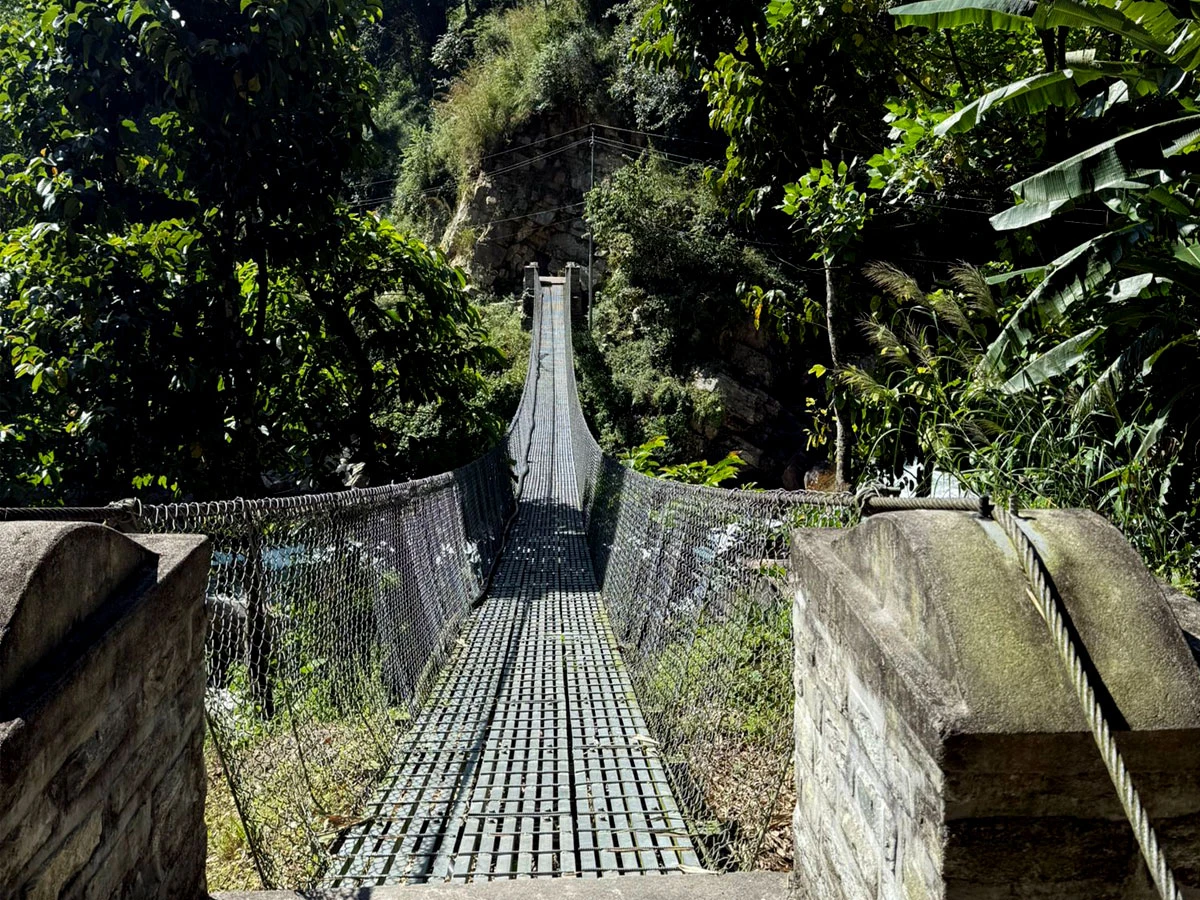
After the lunch break, you will walk for 2-3 hours to reach Bans Kharka. By crossing the suspension bridge at Lame Aahal above the Kaligandaki River, you will climb to Bans Kharka village. It will offer a mesmerizing view of hills, Dhaulagiri ranges, organic farms, and orange farms, along with a typical village lifestyle and friendly locals. The village is highly populated by the Magar ethnic (indigenous) group of Nepal. You can observe the Magar culture and tradition at Bans Kharka.
Trek from Bans Kharka to Nagi ( 2250m), 4-5 hours
The trail is filled with woods, tranquility, and Himalayan views of Annapurna and Dhaulagiri. You will follow the north-west uphill climb to Danda Kateri village at 2009m. There are no tea house lodges until Danda Kateri. You will have a short lunch break at Danda Kateri with Annapurna and Dhaulagiri views, along with a close view of Nagi village.
After Danda Kateri, the trail to Nagi will seem to be easier with soft climbing. Nagi is a small village with great wonder, as it has been working for inclusive community development through education, tourism, technology, and the practice of eco-tourism. They promote local handicrafts, Lokta paper products, fish farming, and mushroom farming, as well as preserve traditions and culture. Nagi village is an exceptional example of hardship and the unity of the community, decorated by the Annapurna and Dhaulagiri ranges. This makes trekkers choose the Annapurna Community Trek.
Trek from Nagi to Mohare Danda (3300m) via Hampal Danda 5-6 hours
After the wonderful stay at Nagi village, you will be heading to Mohare Danda via Hampal Danda. Undoubtedly, you will climb uphill through lush jungle and pass Hampal Pass to reach Mohare Danda. Mohare Danda is also considered to be an alternative to the Ghorepani Poonhill Trek. Trails are scented by the oak, rhododendron, and spruce forests, as well as leading to the ridges offering an enhanced view of Dhaulagiri, Gurja Himal, Tukuche Peak, Dhampus Peak, Nilgiri, Barha Shikhar, Annapurna I, Annapurna South, Machhapuchhre, Annapurna II, Annapurna IV, Lamjung Himal, Manaslu, and many peaks. You will also encounter yaks grazing around. Another amazing thing about this trail is that it has a wireless internet relay station providing internet to remote villages for education, health services, and communication. Mohare Danda will offer you an amazing stay with a chilly breeze, warm hospitality, and a soothing view.
Trek from Mohare Danda to Danda Kharka( 2800m),3-4 hours
The magical moment of sunrise at Mohare Danda adds energy and pleasure among trekkers. With the warm breakfast and amazing stay at Mohare Danda, you will descend downhill towards Danda Kharka. You will have a fantastic ridge walk with a marvelous view of nature and landscape filled with calmness and tranquility. The path through the woods of rhododendron lands you at Danda Kharka. During March-May, the rhododendron blooms at its fullest and spreads the pinkish color throughout the hills. The mountains seem to be closer and bigger. The overnight stay at Danda Kharka will give you more time to enjoy and relax in the Annapurna Community Trek. The walk from Mohore Danda to Danda Kharka is easy and short.
Trek from Danda Kharka to Tikot (2250m), 4-5 hours
The downhill walk continues to reach Tikrit. You will also encounter a slightly changing environment, weather, and landscape. Tikot is a village of narrow lanes and beautiful little houses. Tikot is the habitat of Pun Magar, one of the ethnic groups of Nepal. The homestay will offer you closeness to the local community, lifestyle, and culture. Additionally, the village has old traditional stone-walled houses with eco-cottage features and slate roofs with satellite to connect to wireless wifi. You can also enjoy the traditional Magar dance.
Trek from Tikot to Beni( 830m) 4 hours walk and Drive to Pokhara
Today you will bid goodbye to Nepali village life, Annapurna Community Trails, and the tranquility of the countryside. Your downhill walk for 4 hours will land you at Beni Bazar, a small town on the bank of the Kali Gandaki River.
You will drive to Pokhara and enter the world of urbanization with a touch of natural beauty. If you are not tired, you can explore the famous Lakeside area of Pokhara.
Drive from Pokhara to Kathmandu 6-7 hours
You will return to Kathmandu by the scheduled Tourist bus available for Pokhara- Kathmandu. Driving through Prithivi Highway and passing rivers, hills, ridges, woods, and subways, you will reach Kathmandu within 6-7 hours if there is no traffic jam. You will be transferred to the hotel to relax and rest. However, a farewell dinner is organized to celebrate the success of the Annapurna Community Trek and share wishes for your upcoming journey.
Departure from Kathmandu
Nepal Adventure Team will drop you at Tribhuvan International Airport for your flight. You will be taken to the airport as per your schedule. We bid you goodbye with the hope of meeting you on the next journey to Nepal.
Annapurna Community Eco Village Trek Cost Details
Includes
- Airport pickup and drop off by private car
- 2 Nights Hotel in Kathmandu at a 3-star level on a BB plan basis
- Welcome and farewell dinner at a typical Nepali authentic restaurant
- Kathmandu to Pokhara, and Kathmandu by deluxe Tourist bus tickets
- 1 Night's hotel accommodation on a BB plan basis
- 7 nights Tea house lodge accommodation during the trek
- Full board meals during the trek: Breakfast, Lunch, and Dinner
- An experienced, English-speaking trekking guide, and strong porter, and their daily salary, food, lodging, equipment, and insurance
- Pokhara to Galeshwor, and Beni to Pokhara by Local bus
- All necessary ACAP permits and TIMS Cards
- All necessary equipment: a sleeping bag, a down jacket, and a trekking pole
- First Aid medical kit bag for trekking
- All Nepal government VAT and Local Taxes
Excludes
- Nepal visa fee and international flight
- Sightseeing in Kathmandu and Pokhara
- Extra accommodation and meals behind schedule
- Travel and rescue insurance
- Gratitude to the staff
Dates & Availability
The following dates are the fixed departure dates and a common schedule. Booking is open for 2026/2027. If you want a special and private package, we can arrange one for you.
Essential Information
Passport and Visa
All foreign nationals, except Indian citizens, need visas to enter Nepal. Getting a visa must be the easiest one, though. You just have to go to the Nepalese Embassy/consulate in your country, or it can also be obtained upon your arrival at Kathmandu International Airport. To get a visa, you need to bring 2 passport-sized photos, visa fees, and a valid passport.
Tourist Visa Fees: 3-day transit visa - Free of Cost
15 Days – 30 USD
30 Days – 50 USD
90 Days – 125 USD
For more information, please contact the Department of Immigration.
Kalikasthan, Kathmandu
Tel: 00977-1- 4429660 | 4438862 | 4438868 | 4433934
E-mail: mail@immi.gov.np.
Website: http://www.nepalimmigration.gov.np/
Means of Transport
Tourist bus or private vehicle, and walking. All cost is already included unless otherwise noted.
Travel Insurance
Travel insurance is a must when you travel abroad. Therefore, before you come to Nepal, please make sure you have your insurance documents with you, since our insurance companies cannot insure foreign nationals. Because of the reason that they cover all the expenses if you face some unfortunate happenings and you have to be rescued or medically assisted during the trip, or if your belongings are lost or stolen.
Solo Travellers
We have arranged for a single traveler to pay for a single trip only. He has to share the accommodation with other people of the same sex, though he can also join the other groups.
Foods and Accommodations
All meals are provided during the trek, while only breakfast will be available in Kathmandu and Pokhara. Generally, traditional Nepalese(daal, Bhat, curry, and pickle), Tibetan, Continental, Indian, and other cuisines are available in the local lodges/teahouses. There will also be a welcome and farewell dinner for guests in Kathmandu. In Kathmandu, you'll be staying in the best quality standard hotel, on a twin-sharing basis. On trekking, accommodations are simple yet comfortable on-mountain lodges. Toilets and bathrooms need to be shared in some teahouses.
Note: A Single room is always available but only on special requests and spending extra bucks.
Health and Fitness Required
No previous experience is required since it's a moderate trek. But being a healthy person, physically and mentally, is very important. It is better if we prepare ourselves a few days/weeks prior to the start of the trek by jogging and running regularly, since we will be walking a lot of ups and downs in the hills, ridges, villages, and mountains. Participants with pre-existing medical conditions should inform us beforehand.
First Aid Kit/High Altitude Sickness
Nepal Adventure Team strongly suggests that you have your own personal first aid or medical kit. This trip takes you to some high altitudes, though not much, but the slow walks and regular stops between the walks will help you acclimatize to high altitude, saving you from the high altitude sickness called AMS(acute mountain sickness). Gaining altitude without proper consideration of AMS is fatal.
Your Guide and Porter
Since mountain trekking takes you to remote places over high altitudes, the leader should have a piece of significant knowledge in the field so that he can wonderfully and safely lead you there, clearing any obstacles on the way. We, Nepal Adventure Team, can proudly say that our guides are highly qualified for the role. They are fully trained, experienced, and licensed. They have undergone a whole lot of training to make themselves useful in various situations and to make your journey a smooth and pleasant one.
Our porters are always fully equipped with the gear they need, and as per the company policy, they are always insured and completely looked after. They are our backbone. We allow a maximum weight of 25kg to be carried by one porter. We make sure that they are well-paid and well-treated.
Best Time to Travel
The best time for trekking to the Annapurna community trek is Spring (March to May) and Autumn (September to November) because the weather is warm and moderate, while the view and visibility are the best. The winter is also somehow fine, but the monsoon is the least frequented time because of the occasional heavy rain, and when the roads might be troublesome.
Equipment and Packing Lists
After booking with Nepal Adventure Team, please pack the necessary items as listed:
- Travel documents: passport, visa(if you have one), travel insurance, air tickets, voucher, passport photo (x 2)
- Bank cards or credit cards, travelers' cheques, etc
- Comfortable boots and runners/sports shoes.
- 6-8 pairs of socks, woolen/cotton.
- Fleece jacket, Down / Duvet Jacket, and Rain / windproof jacket.
- Gloves- 2 pairs.
- T-shirts 4-6 pcs, shirts(woolen/cotton).
- A cap for the day and a woolen hat or Balaclava for evening/morning wear.
- Trousers.
- Shorts and tracksuits.
- Sleeping bag (4 seasons) with inner liner.
- Large and small towels.
- Toiletries.
- Water bottle.
- Sun /snow glass.
- Ski/walking poles(optional but useful).
- First Aid/medical kit.
- Rucksack/backpack.
- Duffel Bags(carried by porters or animals).
- Torch / Flashlights with spare batteries.
- Pen knife/ Swiss knife.
- Scarf/mask (for dust and wind).
- Personal hygiene stuff.
- Any other extras you feel are necessary, like binoculars, cameras, books, journals, and more.
Precautionary Note:
Trekking has been long established in Nepal, so the itineraries are modified and moderated in such a way that you can take it easy and slow. DO NOT RUSH AND ENJOY. There is plenty of time, and the guide will keep track of you all the time. It might be a bit harder or a bit colder, but you will get used to it.
Additional Money
Every traveler is different, and they spend their own way. Some spend on food and drinks, while others spend on souvenirs. Either way, consider your own spending habits and also tipping, emergency fund ($200), etc, before you pack up and leave.
Trip Specific Safety
Your guide is always there for your safety concerns and to look after your valuables. But you have to be equally careful. Carry some sort of wallet or belt for your important documents and money. The hotels have a safety deposit box where the lock is recommended before passing the luggage.
A Couple of Rules
Possession or use of any illegal drugs is totally intolerable. It is because of the law that respects the local people and their culture. The group will be expelled in such a case.
Responsible Tourism
Nepal Adventure Team strongly believes that we are all equally responsible for acting in favor of the local people and the surrounding environment. Our clients, too, have an important role to
- Respect the local laws, customs, and beliefs
- Always ask for permission before doing something locally or consult the leader
- Keep the area the same as you found it, wherever you go, and dispose of rubbish
- Support local skills to encourage the positive sides of tourism.
Feedback and Reviews
This is very, very important for us. After your travel, we want your feedback, whether it is good or bad, since that's the way we can thrive further. To motivate you to finish the review or feedback online, we are going to give you an 8% discount on your next trip with us. Outstanding, ain't it?
Additional Information
For all the additional information, go to contact us by message, and call Mr. Jeevan Thapa Magar at +977 9851234322 (Viber/WhatsApp)
What Our Guests Say?
As an eco-conscious traveler, the Annapurna Community Eco Village Trek exceeded all my expectations. Beyond the awe-inspiring landscapes and challenging trails, what truly stood out was the unwavering commitment to...
Annapurna Community Eco Village Trek was an experience like no other! From the moment I arrived, I was greeted with warmth and hospitality by the locals. The trek itself was...